Le Shit
This year, global plastic consumption hit 516 million tons.

In early October, 2025, I took a walking vacation along the Northern coast of Spain. The Camino de Compostella, a 700-kilometer ramble through small towns, farmland, woodlands and, in part, highways and over waterways, is largely seen as a “spiritual walk” for “pelegrinos,” or pilgrims. Most of those taking the trek, or parts of it, are out for different reasons – therapy, health, intense contact with nature or to commune with friends and talk about beauty, truth and yes, perhaps God and or Gravity. My trip was all blue skies, white puffy clouds, salutations of “¡Buen Camino!” and occasional misty rains that smacked of Tolkien’s The Hobbit. Gorgeous all around – healthy for the body and mind, and an inexpensive way to survey civilization and one’s own heartbeat.
With a pair of seasoned hikers, I took a week to happily tramp some 100 kilometers looking for nothing in particular and everything in general. There was scant traffic encountered when crossing highways; no bears or wildlife beyond the occasional squished salamander or Eurasian Robins chirping busily in trees. What civilization we witnessed consisted of abandoned homes and barns in full decay, bricks tumbling down and pigeons going freely in and out of broken windows and collapsed roof tops. Along the main drags of pint-sized towns like Navia, Luarca and Ribadeo, easily half the storefronts were boarded up, dead leaves and dust swirled about in their doorways; windows busted, and plywood boarding, bloated with rainwater, curled and rotted out, served as canvases for young Spanish graffiti artists and carnival poster marketers.
Wandering through these medieval hamlets founded a thousand-plus years ago, we obeyed the Camino’s yellow arrows, most painted Ab-Ex style on walls and telephone poles; tourist-tinted ceramic shells indicating the route to Santiago, complemented the artful nature of the Camino. Once checked into a local hotel, I would often peel off from my companions and visit the local sights – a harbor, a circus, an ancient well, an empty bus stop, a bodega.
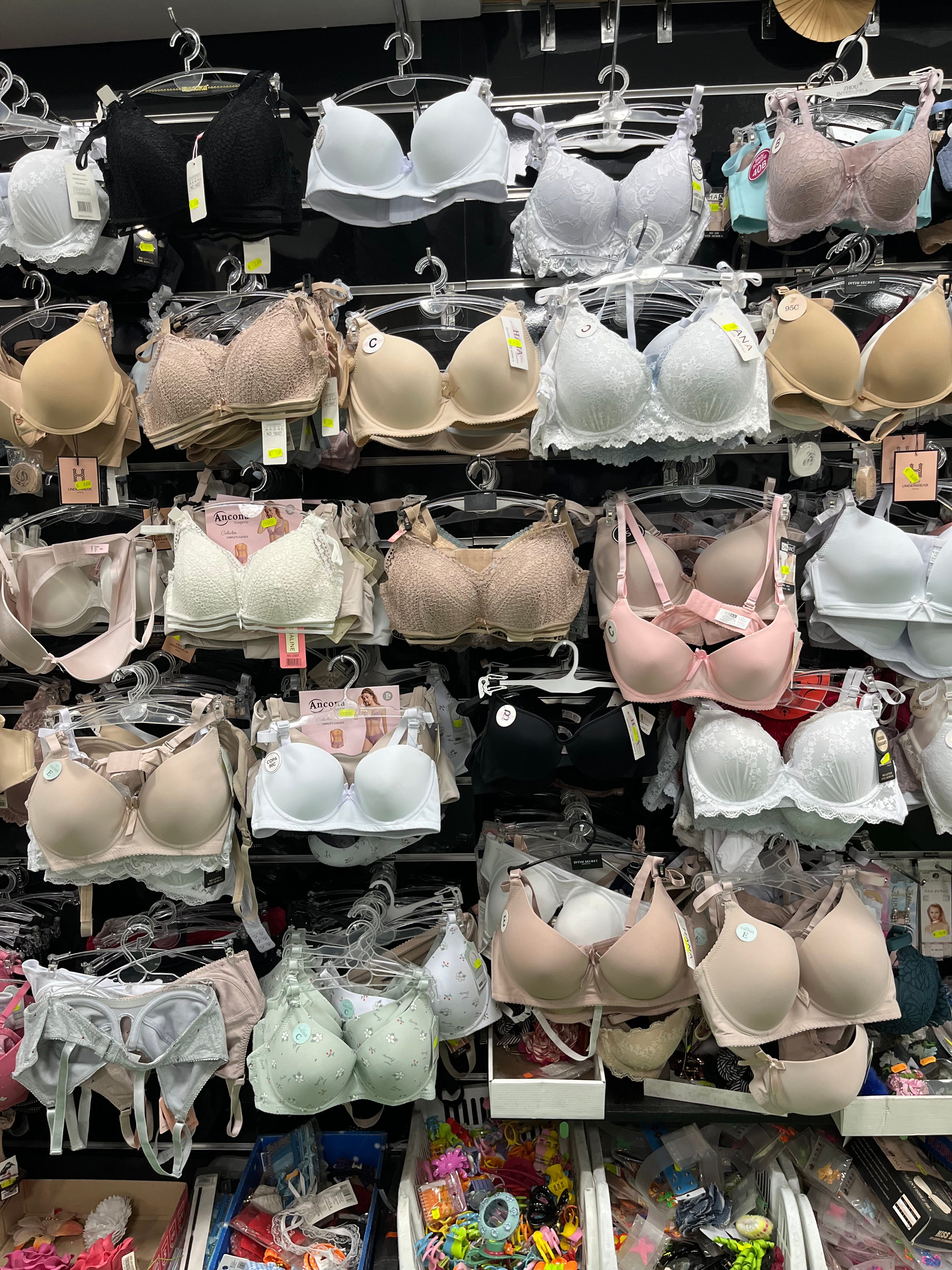
As I walked about, I couldn’t help but notice the omnipresence of warehouse-style super stores offering thousands upon thousands of plastic goods, all made from the lowest, crudest form of petroleum; almost everything originating from China. Each of these retail barns numbered a few thousand square meters. These “groceterias” offered up everything from cheap plastic swords for kids, plastic knives and forks for adults, fake animal tails, Captain Hook prosthetics, plastic hatchets, rayon shirts, synthetic track pants, non-cotton underwear (for men and women), bras and undies, and aisle after aisle of housewares that radiated a gas station stink that just wouldn’t quit. A study in retail toxicity. I still had to see it all in spite of the fact my head was throbbing and my skin was beginning to itch. I raced about one of these depots and found it hard to breathe but I needed to photograph it all. Someone lighting a Marlboro next to rows of nurse and witch costumes (Halloween of course) would blow the place to Kingdom Come.
I pulled my tee-shirt over my mouth and nose and hurriedly documented the acres of man-made garbage before it became part of the landfill after pausing briefly at every house and school in the North of Spain. Skedaddling out of this plastic emporium to get re-oxygenated, I spied the owners as I sprinted to the door. They seemed either immune to the poison, or were already dead as they mindlessly checked their smart phones for deliveries (or were searching for porn), undoubtedly on their way to the cancer ward.
Outside I inhaled fresh air as if for the first time. Did I cry or was I just secreting naphtha? I had certainly consumed it. A World Wildlife study claimed humans indeed do consume up to a credit card’s worth or 5 grams of plastic per week(1). Today pretty much everyone on the planet is inhaling or ingesting plastic by wearing it, eating off it, or snacking on it through eating other animals and plants or just breathing the air that is constantly absorbing it. If we keep at it in a single generation, current rates of plastic production will outweigh all the fish in the sea by 2050, according to the Center for Biological Diversity.
This year, global plastic consumption hit 516 million tons. A recent study showed that if you were to meet your daily water requirements from single-use plastic bottles, you’re likely to ingest an additional 90,000 microplastics (over the course of a year) [From The Journal of Hazardous Materials]. People who drink from their taps don’t have that issue. In any case, plastic will eventually get you – get us. Most of it, (90 percent) heads into the landfill, the oceans and a good amount of living organisms we consume. And now Trump is selling gasoline for the auto industry. Yep, only he can fix it.
So this is the world as we know it. Sure there are still beautiful azure vistas to see and Amazon green avocados, fruity whole wheat breads and crisp red natural wines to eat and drink, but there’s a lot of plastic shit, too. More of this shit than we need and probably more than we can stand and undoubtedly enough to wipe us out, along with the artificial intelligence we’ve created to help mega-produce the tsunami of crap we’ve created to help us live our lives. One breath of this stuff, though, makes you wish maybe you’d never been born. It’s the flavor of death and it’s what we seem to be about these days, regardless of the blue skies and gentle rains. Have I said I always had doubts there was a point to the human race? If there is, I doubt the yellow arrows are indicating the way to salvation.
Matthew Rose.
This piece was originally published in Trouble. Download free or go crazy and buy a print copy here : TROUBLE
(1) https://www.wwf.org.pe/en/?349391/Plastic-ingestion-people-could-be-equating-credit-card-week
We are on the way to completely ruining the planet.